In the south of France lies a city that is understated yet breathtaking. It doesn’t have the glamour of Paris or the flamboyance of Nice, but it possesses a calm elegance all its own. This is Montpellier—a cultural capital where sunlight and history gently intertwine. When people think of southern France, their minds often go to the lavender fields of Provence, the Old Port of Marseille, or the crashing waves of the Côte d’Azur. Yet for me, it’s the cobbled medieval alleys of Montpellier, the hilltop Saint-Pierre Cathedral, and the vibrant university life that linger in my memory.
First Impressions: Between History and Sunshine
My first trip to Montpellier began on a late winter morning. I took a high-speed train from Paris, and after about three hours, I arrived at Montpellier-Saint-Roch station. The moment I stepped outside, I was greeted by the warm southern air and a vivid blue sky—so different from the damp gray of Paris. There was a certain lightness in the atmosphere, a laid-back charm that instantly put me at ease. Locals strolled leisurely with baguettes in hand, and palm trees lined the boulevards, hinting at the Mediterranean lifestyle that defines the city.
This city is full of life. The graffiti and music in the streets pulled me into its rhythm almost immediately. Montpellier doesn’t overflow with tourists like some other cities; it still preserves its local soul. It has a thousand years of history under its belt, yet it pulses with the energy of a youthful university town. It’s both ancient and modern, solemn and free-spirited. There’s a rare balance here—between tradition and innovation, between contemplation and celebration—that makes every street corner feel like an invitation to explore further.
Wandering the Old Town: A Maze Through Time
The most enchanting part of Montpellier is undoubtedly its historic center, also known as “Écusson,” which means “shield” in French—named for its shape on the map. The narrow winding streets form a labyrinth that seems to stretch back through time. As I wandered aimlessly, I was captivated by tall stone houses and wrought-iron balconies. The scent of fresh bread wafted from hidden bakeries, and ivy crept up centuries-old walls, whispering stories of the past.
I especially loved Rue du Bras de Fer. Its dark gray cobblestones are flanked by vibrant doors, windows, and wall art. There’s a whimsical charm to the street, as though it had been painted by artists who wanted to preserve joy. Many of the old homes have been transformed into indie bookstores, antique shops, and cafés. I sipped a rosewater latte in one such café while watching sunlight pour over a cat curled up on the corner, and time seemed to pause. I could have stayed there for hours, lost in that delicate balance of color, quiet, and gentle life.
Saint-Pierre Cathedral and the Museum of Medicine: The Power of Faith and Knowledge
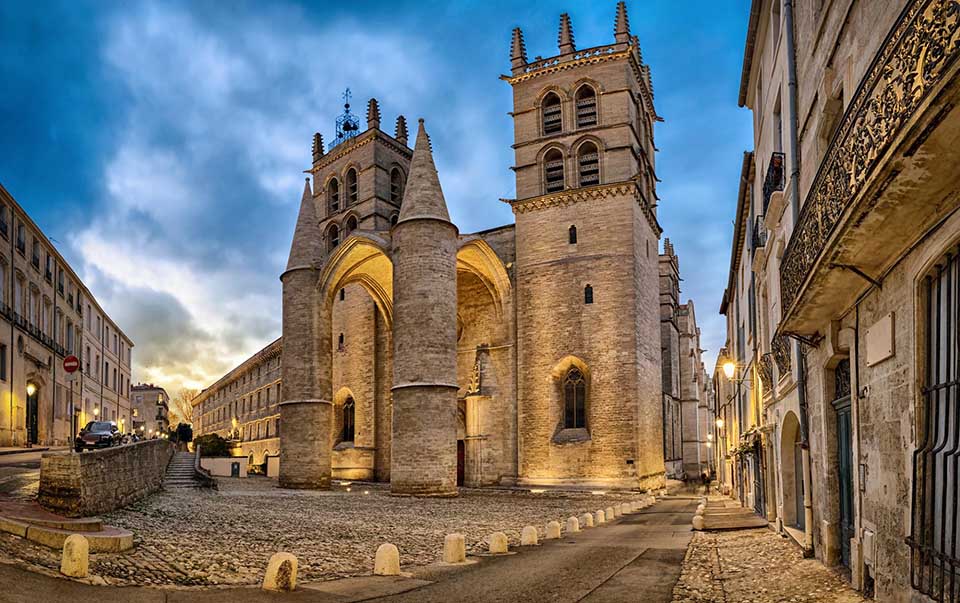
Continuing along the narrow streets of the old town, I eventually found myself in front of Saint-Pierre Cathedral—an architectural masterpiece that looms over the city. The cathedral’s colossal columns, reminiscent of fortress turrets, give it an imposing and mysterious presence. As I stepped inside, I was struck by the overwhelming beauty of the stained-glass windows, their intricate designs casting colorful patterns onto the ancient stone floors. The atmosphere inside felt both sacred and timeless, creating a sense of reverence. Adjacent to the cathedral is the University of Montpellier’s Faculty of Medicine, one of the oldest in the world. It has been the birthplace of many medical innovations and is home to a treasure trove of historical medical texts and rare surgical tools. The museum’s anatomical theater, with its oval wooden seats and worn surfaces, provides a fascinating glimpse into the medical practices of the past. It’s easy to imagine the intense curiosity and dedication of the students who once gathered here, eager to witness the groundbreaking lectures of their professors.
Place de la Canourgue and Place de la Comédie: The Soul of the City
After soaking in the history of the old town, I wandered over to Place de la Canourgue, one of my favorite tranquil spaces in Montpellier. This picturesque square, encircled by olive and plane trees, exudes a calm and quiet charm. The central fountain, with its elegant design, draws people from all walks of life to sit by and enjoy the serene atmosphere. It’s a peaceful spot, often overlooked by tourists, offering a glimpse into the daily lives of locals as they enjoy their coffee, read a book, or share a leisurely conversation. From there, I ventured to Place de la Comédie, the lively and bustling heart of the city. The square, known locally as the “Egg Square” due to the oval-shaped paving stones, is a vibrant gathering place. At its center stands the majestic Fountain of the Three Graces, surrounded by grand cafés, chic boutiques, and magnificent theaters. As the sun set, the square transformed into a spectacle of sparkling lights and lively street performances. I joined the crowd outside the Opéra Comédie and was lucky enough to catch a French play. Despite my limited understanding of the language, the actors’ powerful movements and rhythmic pacing spoke volumes, leaving me deeply moved by the experience.
Modern Art and Architecture: Montpellier’s Contemporary Identity
Despite its deep historical roots, Montpellier embraces modernity in fascinating ways. The Port Marianne district is a playground for architecture lovers, filled with works by renowned architects such as Jean Nouvel, Zaha Hadid, and others. The sleek glass façades of these buildings reflect the endless sky and shimmering water, creating an almost otherworldly ambiance that blurs the lines between nature and urban life. I was particularly captivated by Pierres Vives, an avant-garde building often referred to as the “Ship of Knowledge.” It houses not only a library and archives but also exhibition spaces, serving as a public cultural hub. Its striking design is a testament to the city’s commitment to progress and innovation, blending the past with the future. Montpellier doesn’t just preserve its rich heritage—it actively invites the future to unfold within its vibrant cityscape.
Food and Markets: Tasting Montpellier
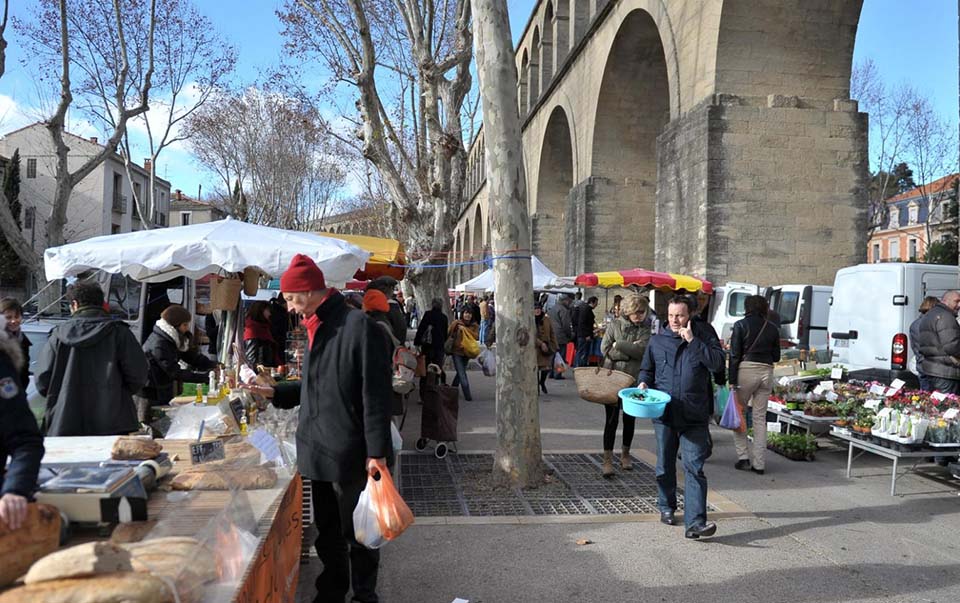
In France, food is always central to any journey, and Montpellier is no exception. The city’s cuisine brims with Mediterranean flavors, offering an abundance of fresh seafood, aromatic olive oil, fragrant herbs, and regional wines, creating a feast that awakens all the senses. A must-visit for food lovers is Le Marché des Arceaux, an enchanting market set beside the ancient Roman aqueducts, open on Tuesdays and Saturdays. The fruits and vegetables are so fresh that they seem as if they’ve just been plucked from the fields, and the stalls are brimming with homemade cheeses, sausages, jams, and even olive-stuffed dumplings crafted by local grandmothers. I purchased some rich, creamy goat cheese, sun-dried tomatoes, and a bottle of red wine from the Languedoc region. With the soft sound of church bells in the distance, I savored my meal on a balcony, basking in the golden Mediterranean sunlight. It was the definition of simple perfection, a celebration of local flavor and timeless tradition.
Short Escapes Beyond the City
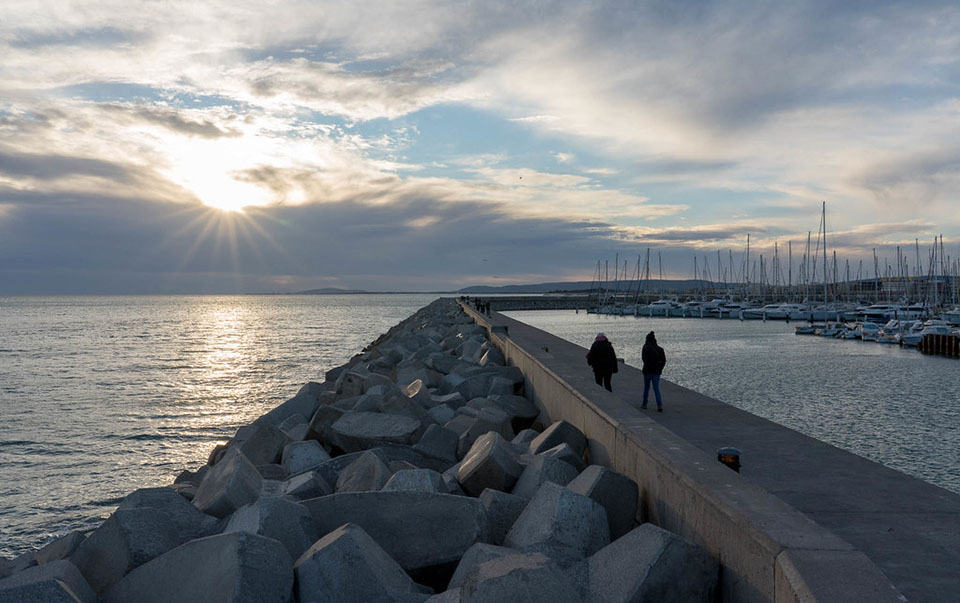
If time allows, consider a short trip outside the city. Just 30 minutes by tram brings you to Palavas-les-Flots, a seaside village on the Mediterranean. On the way, the tram passes wetlands where flamingos wade in groups. At the coast, I ordered salt-crusted sea bass and a citrus apéritif, watching the sun slip beneath the horizon and feeling an even deeper connection to this region.
Another excellent day trip is Pic Saint-Loup, a mountain located just half an hour from Montpellier. It’s a paradise for hikers and wine lovers alike. From the summit, the views stretch to both the Mediterranean and the Languedoc hills. At the base, vineyards offer tastings and tours. I tried a Grenache-Syrah blend—fruity, bold, and the perfect souvenir from my journey.
Practical Tips: Why Winter in Montpellier Is Even Better
Though many choose to visit southern France in summer, I actually prefer winter or early spring. In January, temperatures hover between 10–15°C. The sun shines brightly but gently, and the city’s streets and cafés are blissfully uncrowded—perfect for truly savoring local life.
Montpellier boasts one of France’s most colorful and modern tram systems. The trams themselves are like moving artworks. The TAM daily pass costs just €4.30 and allows unlimited use of trams and buses—ideal for travelers.
If flying in, consider routes that bypass Paris. Direct flights from Geneva, Brussels, Milan, and Amsterdam land at Montpellier–Méditerranée Airport, just 15 minutes from the city center.
Montpellier: A Journey That Time Cannot Erode
To me, Montpellier isn’t just a city of “attractions”—it’s a way of life. A place where you wander through centuries-old alleys, resonate with theatrical performances in intimate venues, and find joy in selecting ingredients from local markets. Its gentle sun and calm rhythm offer a deep and lasting sense of contentment.
This city embodies the freedom of the Mediterranean, the dignity of medieval France, and the intellectual curiosity of a university town. Traveling here isn’t about checking boxes—it’s about conversing with the city: walking her streets, hearing her bells, tasting her essence. And in that dialogue, you’ll discover a place that quietly but powerfully takes root in your heart.