Every February, I find myself drawn to the south of France. Compared to the biting winds of Paris or the damp cold of Nice, Toulouse always offers a warmth that’s gentle and unhurried. Known as “La Ville Rose” or “The Pink City,” it owes its nickname to its rose-hued brick architecture, but its charm lies far beyond appearances—it’s the deep blend of historical depth and modern vitality that keeps me coming back.
The beauty of Toulouse lies in how it seamlessly juxtaposes millennia of history with contemporary expression. Walking through the city, you might stumble upon remnants from the Roman era and, on that very street, discover a cutting-edge art space. This cultural coexistence is why I return again and again. Among the many treasures the city holds, there are five cultural landmarks I find myself visiting every time. Each embodies a distinct era, each offers a different story worth savoring slowly.
1. Basilique Saint-Sernin: A Romanesque Masterpiece
Toulouse in the early morning is cloaked in a gentle mist, and I love walking toward Basilique Saint-Sernin just as the sun begins to break through the sky. The reddish tower of the church, built in the 11th century, stands solemn and proud in the dawn light. It is the largest remaining Romanesque church in Europe and an important stop on the Way of Saint James pilgrimage.
Inside, the church is dim and serene. Pale frescoes grace the vaulted ceilings, while rows of stone columns—each with a unique carving—line the nave. What fascinates me most is the crypt, which houses the relics of Saint Sernin. The air feels almost sacred, as if whispering the echoes of centuries past.
February, being the off-season, means fewer tourists. You can sit in silence on the pews and absorb the sanctity that this church has preserved over a thousand years. Outside, the square bustles quietly with local life: elderly men reading newspapers, sipping coffee in the sunlight. It’s this quiet charm that Toulouse offers so naturally to travelers seeking warmth in more than just temperature.
2. Couvent des Jacobins: A Gothic Intersection of Aesthetics and Thought
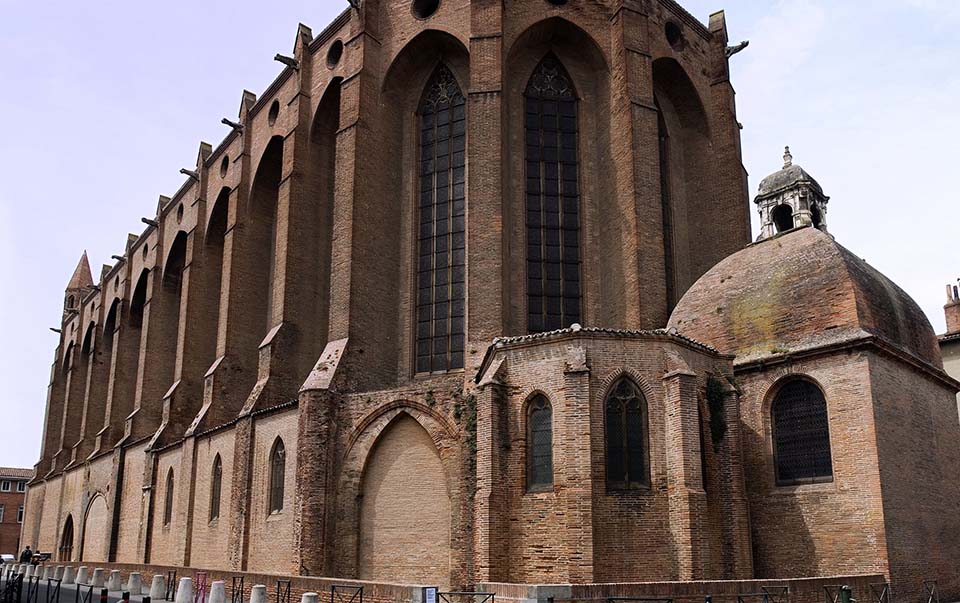
Not far from Saint-Sernin, a cobbled alley leads to the Couvent des Jacobins, a 13th-century Gothic monastery. While its exterior is unassuming, inside hides one of the most stunning architectural spaces I’ve ever encountered: the Palm Tree Hall.
Each time I enter, I’m awestruck by the massive central column that rises like a tree trunk, branching into elegant ribs that support the vaulted ceiling—like a stone canopy of life. In the soft sunlight, the space feels contemplative, ideal for reflection.
The convent is also the resting place of Thomas Aquinas, one of the most important theologians of the Middle Ages. Exhibits inside showcase his manuscripts and legacy. For anyone who loves philosophy and history, this is a spiritual pilgrimage as much as a cultural one.
The courtyard garden remains well-kept even in February, with green hedges and red brick walls complementing each other. The convent often hosts small exhibitions and classical concerts, where echoes of history meet modern expression in the most elegant fashion.
3. Musée des Augustins: Where Art and Faith Intertwine
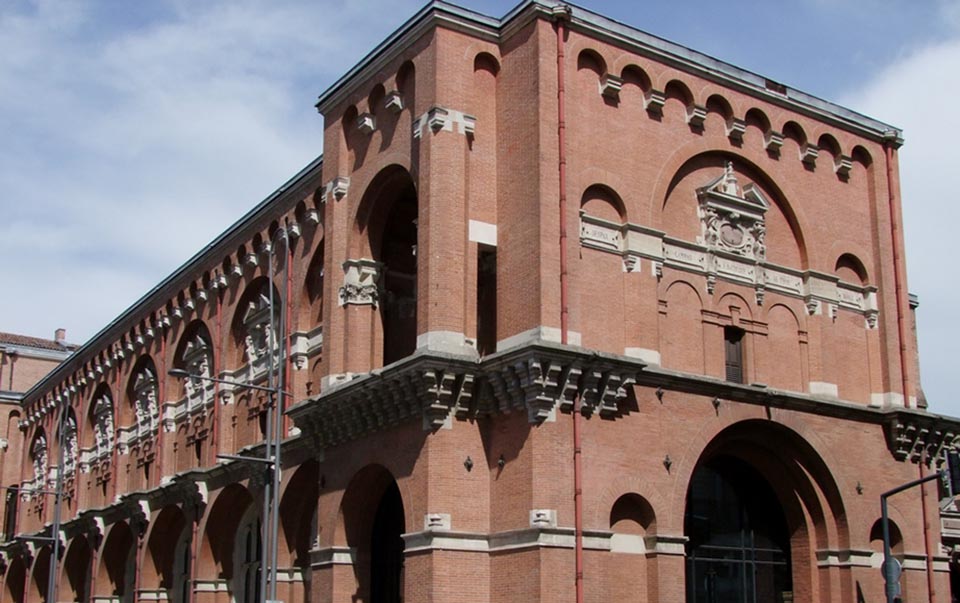
The Musée des Augustins, housed in a 14th-century former monastery, is one of Toulouse’s oldest and most atmospheric art museums. I love visiting on quiet afternoons, especially in February, when the halls are hushed and the light filters softly through arched windows. Behind its heavy wooden doors lies an intimate journey through art history—a world far removed from the busy city streets just outside.
Its collections span Roman sculptures, Gothic church reliefs, and Romantic-era paintings, each curated with care and context. My favorite room showcases sculptural fragments salvaged from ruined churches, many of which are arranged around a serene medieval cloister. Walking among them feels like wandering through sleeping stone memories, where every broken arch and weathered angel speaks of a forgotten past and devotion carved into stone.
Despite its historic weight, the museum is not at all stuffy or intimidating. In fact, it feels surprisingly personal. With few visitors in February, you can easily lose yourself in contemplation—whether admiring a luminous canvas or tracing the fine chisel marks on ancient statues. There’s a stillness here that invites reflection. Each exhibit whispers a forgotten part of Toulouse’s story, and I’m simply there to listen, to let time slow, and to connect with the silent eloquence of centuries past.
4. Pont Neuf by the Garonne River: Where History Meets the Everyday
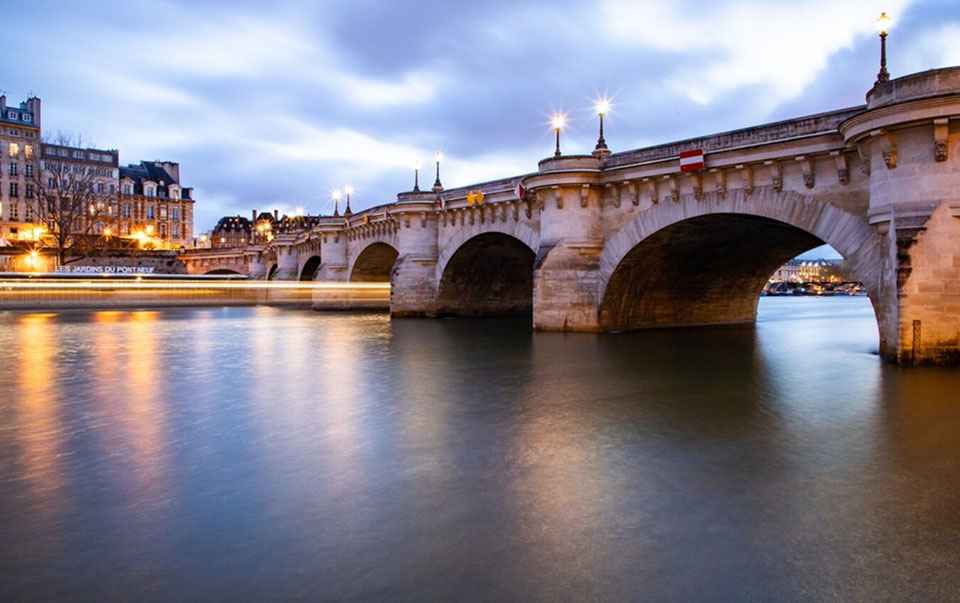
Every evening in Toulouse, I find myself irresistibly drawn to the banks of the Garonne River—especially to the iconic Pont Neuf. Ironically named “New Bridge,” this 17th-century masterpiece is actually the oldest surviving bridge in the city, and a living monument to Toulouse’s architectural legacy.
From its broad stone arches, you can watch the Garonne flow gracefully between two worlds: on one side, the ancient red-brick facades of the old town; on the other, the sleek modernity of riverfront plazas and open-air promenades. It’s a seamless dialogue between past and present, where the city’s layered identity becomes visible with every step you take across the span.
Sunsets from the bridge are especially magical. The sky transforms into molten hues of gold, crimson, and lilac as the sun dips behind distant rooftops, bathing the entire city in a warm, ethereal glow. In February, the air is crisp but never biting; with a scarf and gloves, you can linger on the bridge and simply take it all in. Nearby, cozy cafés and wine bars offer perfect places to rest. I often find myself ordering a glass of local red wine, paired with olives and rustic biscuits, watching as the river reflects the shifting sky. This is Toulouse’s quiet romance, distilled into a single, luminous moment—a daily ritual I never tire of.
5. Cité de l’Espace: A Cultural Leap Toward the Future
Toulouse isn’t just a historic gem—it’s also the heart of France’s aerospace industry. Cité de l’Espace is a cultural theme park that combines science, education, and interactive fun. For me, this is where the city’s forward-looking spirit comes alive in the most tangible way. Walking through the entrance feels like stepping into a world of innovation and imagination, where the boundaries between learning and play dissolve seamlessly.
February is an ideal time to visit, with almost no queues and a peaceful, focused atmosphere. You can take your time exploring the life-sized Ariane 5 rocket, the intricate space station modules, and the detailed satellite replicas that line the open-air exhibits. One of my favorite moments was joining a group of French schoolchildren in a simulated astronaut training session—complete with weightless movement exercises and team-based navigation tasks. The joy, curiosity, and sense of discovery that lit up their faces reminded me why I keep coming back.
The planetarium is another highlight. It features immersive, high-resolution astronomy shows projected on a vast domed screen that fully envelopes your vision. Watching galaxies swirl, comets burst, and black holes stretch across the cosmos is as emotionally stirring as standing in front of ancient frescoes—just directed upward, into a different dimension of time and wonder.
As I leave the center, I often feel humbled and reinvigorated. Toulouse is not only a city that remembers its past with reverence; it embraces the unknown with courage. The Cité de l’Espace reminds me that culture doesn’t only belong to the past—it is also built with curiosity, science, and dreams.
A City That Walks Through Time
Toulouse is a city that invites you to slow down, to walk its streets not with urgency, but with openness. Its culture doesn’t scream for attention; it whispers in the details—hidden in terracotta bricks, echoed in the cloistered silence of old convents, and flowing gently along the Garonne River. It is a place where you don’t just observe history, you feel it beneath your feet and in the air around you.
Visiting in February feels like being granted an intimate audience with the city itself. There are no loud festivals, no overwhelming crowds—just the rustle of plane trees, the aroma of fresh croissants from quiet bakeries, and the occasional bell ringing from a distant church. The streets offer solitude, not loneliness, and allow for a kind of reflection that’s difficult to find elsewhere.
From the spiritual gravitas of Saint-Sernin to the cosmic wonder of the Cité de l’Espace, Toulouse gives me more than architecture and art—it offers an emotional passage through time. It doesn’t try to impress with spectacle; it impresses with depth. Walking its streets, I feel tethered to the past by history and architecture, and at the same time, buoyed toward the future by its forward-thinking science and design.
And that, above all, is what makes Toulouse utterly unforgettable: its ability to balance memory and momentum, its quiet confidence in letting both coexist. It is a city that teaches you how to look both ways—into where we’ve come from, and toward where we might go.